Loading image...
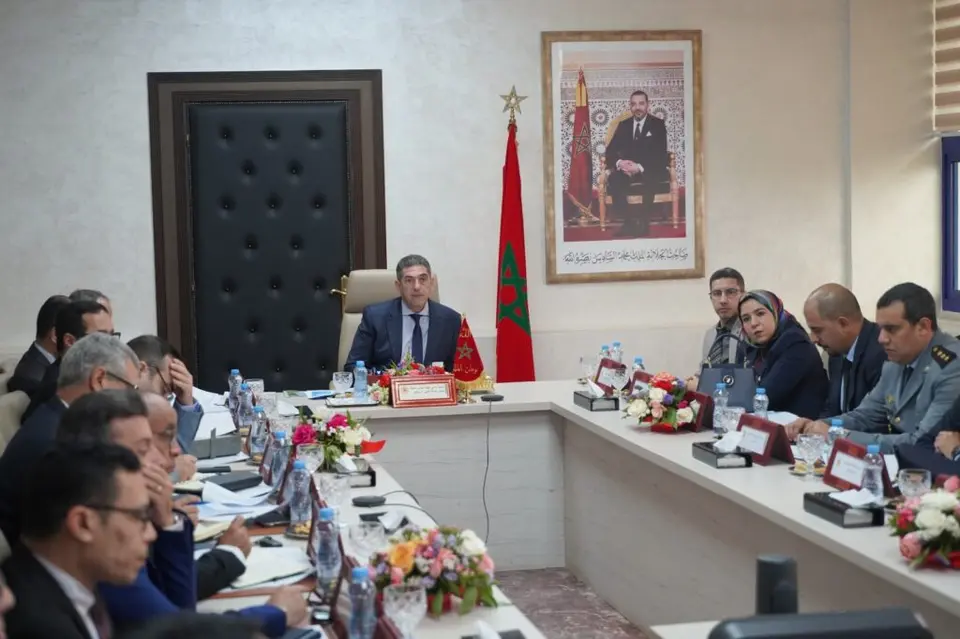
Governor Amzazi oversees the Regional Child Protection Committee meeting in Agadir and approves the 2026‑2027 program.
Governance & Child Protection
As part of strengthening national efforts to protect children, the headquarters of the Agadir Idaoutnan prefecture hosted, on Thursday, 16 April 2026, a meeting of the Regional Committee for Child Protection, chaired by Saeed Amzazi, the Wali of the Souss-Massa region and the regional governor, to study and approve the regional action‑plan project for the 2026‑2027 period.
The meeting was attended by representatives from a number of judicial and security institutions and decentralized services, in addition to UNICEF. In a process that reflects the participatory nature that characterises the drafting of this plan, and the will to unify efforts to address the challenges related to child protection at the territorial level.
This meeting is part of the activation of national directives linked to the implementation of the integrated public policy for child protection, as well as the completion of a consultative process launched at the end of 2025, resulting in the development of a practical vision based on a precise field diagnosis, complemented by a technical committee in coordination with various stakeholders and with UNICEF support.
The new regional plan rests on three main pillars: strengthening preventive mechanisms within schools and community spaces, improving the psychological and social well‑being of children, and developing governance while increasing the effectiveness of protection interventions.
During the meeting, the governor emphasized that the success of this workshop remains dependent on the genuine involvement of all stakeholders, within a participatory, convergence‑based approach, calling for the mobilization of the necessary resources to ensure program continuity and achieve the set objectives.
He also highlighted the importance of this project in light of the dynamism experienced by the Agadir Idaoutnan prefecture, particularly in tourism, and the accompanying social challenges that require strengthening protection and care mechanisms for vulnerable groups, especially children.
He stressed that the plan aims to establish an integrated and effective child‑protection system, based on close coordination and continuous monitoring, supported by precise indicators to measure impact and guarantee tangible results on the ground.
The meeting concluded by underscoring the need to continue collective mobilization and joint work to implement the contents of this plan, in order to safeguard children's rights and reinforce the region's position as a national model in this field.
Source: medmarmedia