Loading image...
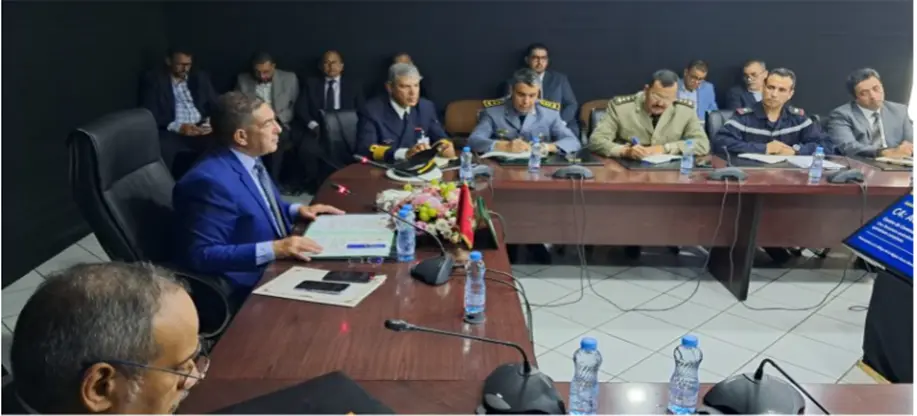
The Wali of the Souss-Massa region chairs a preparatory meeting for the establishment of Agadir’s Command, Control and Coordination Centre.
As part of preparations for the 2030 World Cup, the governor of the Souss-Massa region chaired a meeting on November 12, 2026, devoted to the Agadir Command, Control and Coordination Center project.
As part of ongoing preparations for the city of Agadir to host major international events, foremost among them the final phase of the 2030 FIFA World Cup, a preparatory meeting was held on Thursday, November 12, 2026, at the headquarters of the Souss-Massa Regional Wilaya, under the chairmanship of the regional governor. The meeting focused on the project to establish Agadir’s Command, Control and Coordination Centre.
The project is part of efforts to strengthen Agadir’s capacity to host major international events, particularly the 2030 World Cup, by introducing modern urban management mechanisms based on proactive coordination, data sharing, swift decision-making and effective response measures.
In his opening address, the regional governor stressed that the challenge extends beyond simply meeting the requirements for organizing the World Cup. It represents an opportunity to establish a sustainable system serving the city and its residents through the creation of a permanent, integrated centre that would serve as a strategic tool for managing and coordinating the city’s various services and urban facilities.
The regional governor emphasized that the centre would not be merely a surveillance facility, but an integrated platform designed to unify the overall vision and strengthen operational coordination among the various stakeholders in the fields of security, mobility, public transport, water and electricity, sanitation, healthcare, emergency response and infrastructure, while ensuring the alignment and complementarity of the interventions carried out by the institutions concerned.
The meeting provided an opportunity to harmonize the vision surrounding the project and begin cataloguing the existing and planned systems and equipment within the various institutions, as well as identifying possibilities for interconnecting and integrating them. This will pave the way for a new phase of smart and integrated urban management.
At the conclusion of the meeting, emphasis was placed on the importance of mobilizing and effectively involving all the partners and institutions concerned. The success of the project will not be measured solely by its level of technological development, but by its ability to improve the quality of public services, enhance citizens’ safety, facilitate their mobility and ensure the continuity of essential and vital services.