Loading image...
Agadir Hosts Regional Meeting to Strengthen Civil Society’s Role in Environmental Advocacy and Defending the Freedom to Form Associations
On November 21, 2026, Agadir hosted a regional meeting organized by the Femmes du Sud association, in partnership with Espace Associatif and Migrations & Développement, focusing on climate advocacy and freedom of association.
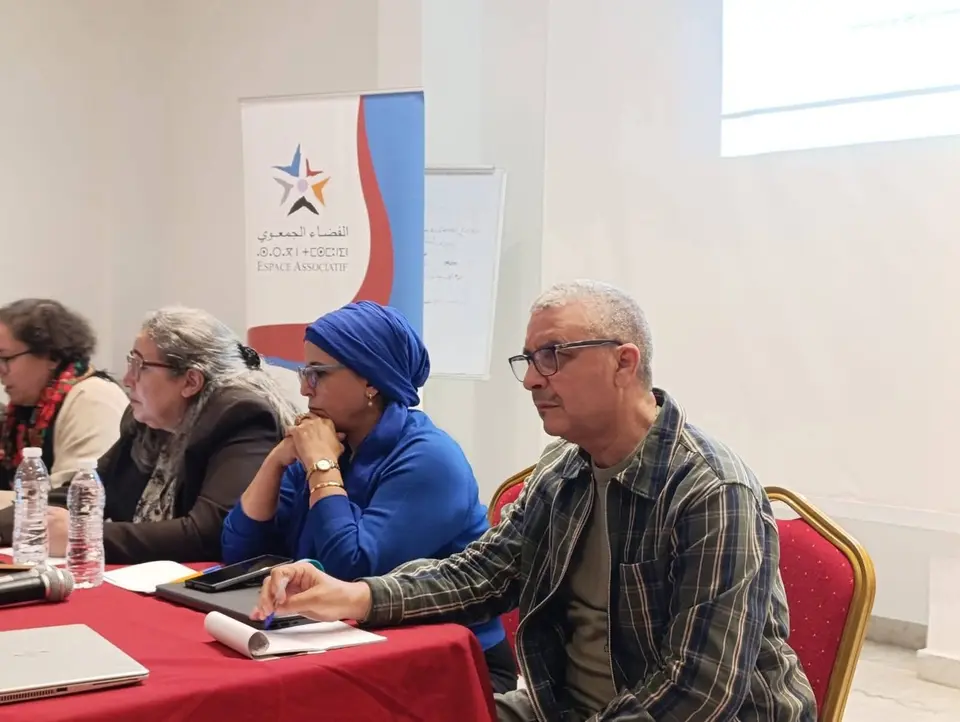
The city of Agadir hosted, on Saturday, November 21, 2026, a regional meeting devoted to the role of civil society in addressing environmental and climate challenges, strengthening advocacy for climate justice, and examining constraints related to the exercise of the right to establish associations.
The meeting was organized at the initiative of Femmes du Sud, in partnership with the Associative Space and Migrations & Development, with the participation of numerous civil society actors, human rights defenders, and people interested in environmental, sustainable development, and human rights issues.
The event provided a forum for exchanging experiences and reflecting on ways to strengthen civil society action in response to the challenges facing mountainous, rural, and oasis areas, particularly regarding natural resource management, biodiversity conservation, and mitigating the social and economic impacts of climate change.
In this context, the Network of Associations of the Tiznit Biosphere Reserve presented its experience in advocating for the institutionalization of the Argan Forest Biosphere Reserve and the preservation of biodiversity through the promotion of cultural heritage. The network reviewed the initiatives and steps that had contributed to achieving this objective, highlighting the role of civil society action in defending natural areas and promoting sustainable development based on a balance between environmental protection and improving the living conditions of local communities.
The presentation also highlighted the importance of institutional advocacy as a mechanism for protecting fragile ecological areas and promoting the sustainable management of natural resources, while involving local communities in decisions concerning their environment and territorial assets.
Other presentations addressed the repercussions of climate change on economic, social, environmental, and cultural rights, highlighting the challenges faced by rural, mountainous, and oasis areas, foremost among them water scarcity, the degradation of ecological balances, social vulnerability, and the impact of climate shifts on local stability and development.
Among the issues that prompted extensive debate was the need to develop the way associations operate and move from isolated initiatives toward more organized forms of cooperation and territorial networking. Emphasis was placed on the importance of building coordination mechanisms among civil society bodies to facilitate the exchange of expertise and information and unify positions on shared concerns.
Against this backdrop, a proposal emerged to divide areas of intervention according to thematic specializations, given the multiplicity and complexity of environmental, human rights, and development issues, as well as the knowledge and expertise they require—areas that are difficult for a single association to master.
Participants said that strengthening this approach would improve the performance of associations and raise the level of advocacy through the preparation of joint memorandums and proposals, the coordination of initiatives, and the complementary roles of the various actors at the territorial level.
In another session, the meeting addressed freedom of association, between legal guarantees and challenges linked to administrative practice. The difficulties encountered by some civil society bodies during the establishment process were highlighted, particularly with regard to the issuance of provisional and final registration receipts.
The debate provided an opportunity to exchange views on the need to uphold constitutional and legal guarantees related to the freedom to organize and engage in associative activities, and to remedy administrative practices that may obstruct the exercise of this right.
The contents of the national petition were also presented and its demands discussed. The signing of the advocacy memorandum proposed by the Associative Space was opened as part of the launch of a national campaign aimed at mobilizing civil society actors and rights defenders to defend freedom of association and strengthen the independence of civil society.
The diversity of topics addressed during the meeting reflects the intersection of environmental and human rights issues with local development challenges. It also underscores the need to develop civil society action based on specialization, coordination, and knowledge-based advocacy in order to strengthen civil society’s presence in public debate and its role in supporting development policies at the territorial level.