Loading image...
Industrial Pollution in Anza: Amzazi Sets One-Year Deadline to Relocate Factories, With Permits Withdrawn and Violators Shut Down
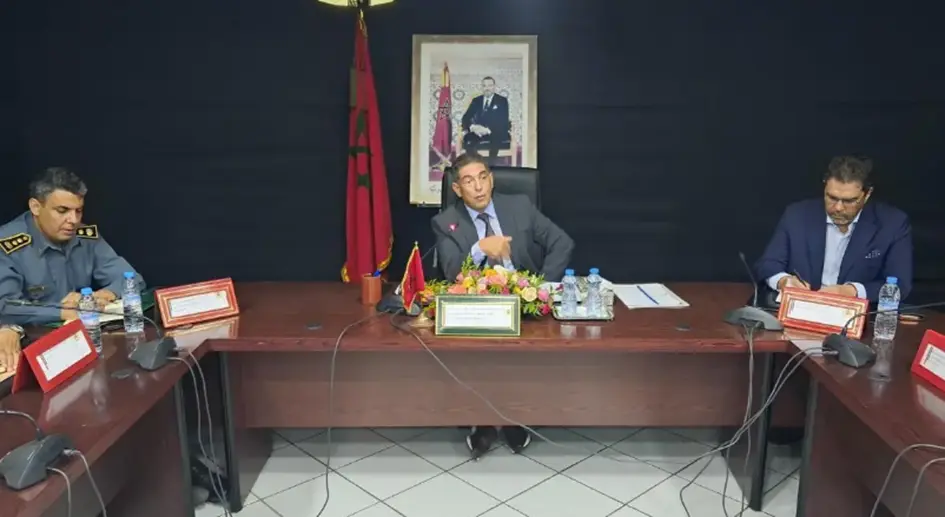
Wali Saïd Amzazi chaired a meeting on October 15, 2026, on industrial nuisances in Anza, setting a one-year deadline for relocating the affected facilities to the Drarga industrial zone.
In a firm move to address the environmental problems concerning residents of Anza and neighboring areas, Saïd Amzazi, wali of the Souss-Massa region and governor of Agadir Ida-Outanane Prefecture, stressed the need to move from diagnosis to the effective implementation of solutions. He set a maximum deadline of one year for the transfer of the industrial units concerned to the Drarga industrial zone, warning that strict legal measures would be taken against violators, including the withdrawal of permits and closure.
The announcement was made during a meeting chaired by the wali on Thursday, October 15, 2026, at the headquarters of the Souss-Massa regional administration. The meeting was attended by the president of the Regional Council, the vice-president of the Agadir Municipal Council, representatives of administrative and technical services and local authorities, as well as the industrial operators concerned.
The meeting focused on the environmental and health impacts of industrial emissions and odors in the Anza area, particularly those originating from fishmeal production units. Residents have lodged continuous complaints over their impact on quality of life in Anza, Aourir and neighboring areas, as well as on the tourist appeal of the city of Agadir.
Mr. Amzazi stressed that addressing this issue requires all stakeholders to assume their responsibilities and strictly fulfill their legal and environmental obligations. This includes adopting urgent corrective measures, setting a clear timetable, and establishing effective monitoring and follow-up mechanisms to ensure that the decisions taken are implemented.
The meeting resulted in the adoption of three key measures. The first involves immediately dispatching a specialized committee to conduct field inspections of the industrial units concerned, assess their operating conditions, identify environmental shortcomings, and determine the measures and works required to eliminate the sources of pollution and nuisance.
The second measure requires the industrial units to regularize their environmental status by establishing and equipping wastewater and industrial-effluent pretreatment facilities, and by adopting effective systems for treating odors and gaseous emissions, in accordance with applicable standards and regulations.
In this regard, it was stressed that failure to comply with these obligations would result in the necessary legal and administrative measures, including the withdrawal of permits and the closure of non-compliant units, in accordance with the legislation and regulations in force.
The third measure provides for the transfer of all the industrial units concerned from the Anza area to the developed industrial zones of Drarga within a maximum period of one year, in implementation of the commitments set out in the support agreement concluded for this purpose.
No relocation of Anza’s pollution to other areas
Alongside the decision to relocate the plants, the meeting stressed the need to equip the new host sites with the necessary environmental infrastructure and facilities, particularly wastewater and industrial-emission treatment systems. This is intended to ensure that pollution sources are not simply shifted to other areas and that the same environmental problems do not recur.
It was also emphasized that the responsibilities of the various stakeholders must be clearly defined and that commitments must be accompanied by clear implementation deadlines, along with regular assessment and monitoring to verify that the industrial units are complying with the measures adopted.
These decisions respond to residents’ longstanding demands for radical and sustainable solutions to the problem of odors and industrial emissions, given the challenges these activities pose to environmental protection and public health, as well as the need to reconcile industrial development with the preservation of quality of life.
The meeting marks a new stage in the management of this issue, centered on implementing the commitments within the established deadlines. The main challenge now is to turn the decisions into concrete action that will end residents’ suffering and eliminate the sources of nuisance and pollution.
The real test of these decisions will be their implementation on the ground and compliance with the one-year deadline set for relocating the industrial units, upholding a fundamental principle: economic development and industrial investment must not come at the expense of citizens’ health, environmental protection, or the tourist appeal of the city of Agadir.