Loading image...
Urgent Decisions to End the Coastal Pollution Crisis in Anza, Agadir
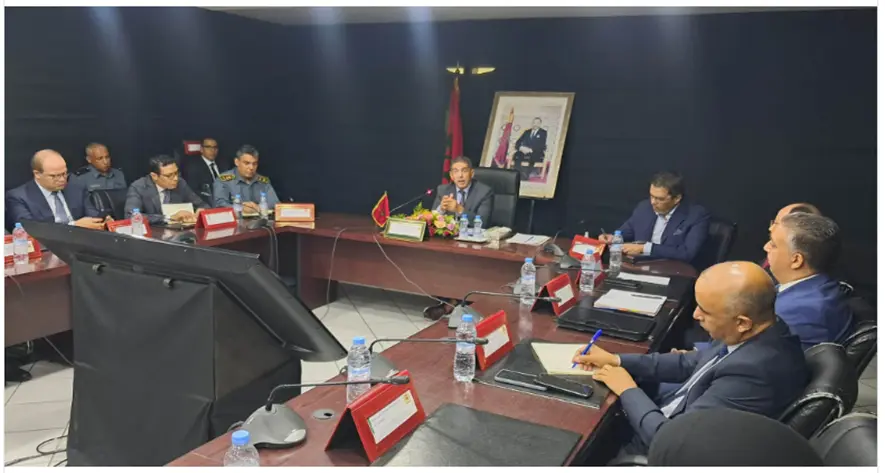
After the meeting chaired by Wali Saïd Amzazi, a look back at the measures adopted to tackle pollution in Anza, the relocation of factories planned since 2015, the role of the wastewater treatment plant, and the employment challenge.
The issue of pollution and the foul odours engulfing the Anza area of Agadir has taken a new turn with the involvement of the Agadir wilaya, following the deterioration of environmental conditions in the area over recent weeks. This has prompted letters, complaints and petitions to the Interior authorities and Agadir Municipality, calling for action to put an end to the problem that is causing concern among residents.
The Agadir wilaya sent an urgent letter to several institutions and sectors concerned, as well as to the owners of factories, workshops and companies located in the Anza district and along its coastline, summoning them to an urgent meeting chaired by Saïd Amzazi, wali of the Souss-Massa region, last Thursday from 10 a.m. at the wilaya headquarters. The meeting was held to discuss the causes of industrial pollution in the area and ways of addressing them.
The summons was based on field observations of pollution and foul odours that had engulfed the area in recent days, as well as repeated complaints concerning the discharge of waste and residues by Anza’s industrial units, given their harmful effects on the environment and human health.
Firm and urgent corrective measures
The meeting focused on examining ways and means of definitively resolving the problem of foul odours and industrial waste. Those summoned included the president of Anza district, the president of the Souss-Massa Regional Council, the president of Agadir Municipal Council, the director-general of the Souss-Massa Regional Investment Centre, the director-general of the Souss-Massa Regional Territorial Health Group, the director of the Agadir health district, the regional director of the Environment Department, the regional director of Industry and Trade, the director of the Souss-Massa Hydraulic Basin Agency, the director-general of the Regional Multiservice Company, the regional director of Equipment, the director of the Agadir Urban Agency, the regional director of the National Office for Food Safety, the regional delegate for maritime fisheries in Souss-Massa, the director-general of Al Omrane Souss-Massa and the director of the “Haliopolis” industrial zone, as well as representatives of all industrial units operating in the area.
The meeting resulted in urgent decisions, some of them medium-term, aimed at finding solutions to the environmental problem affecting the district.
According to the available information, the meeting was devoted to examining environmental problems linked to industrial emissions and odours in the Anza area, as well as measures capable of limiting their impact on residents and the environment. This came amid continued complaints from residents about odours released by certain industrial units, particularly those specialising in fishmeal production, and their repercussions on quality of life in Anza and Aourir, as well as on Agadir’s tourism sector.
During the meeting, participants agreed on the need to adopt firm and urgent corrective measures requiring industrial units to comply with current environmental standards, while defining the responsibilities of the various stakeholders and establishing regular monitoring and follow-up mechanisms.
The meeting, whose outcome had been eagerly awaited, produced three key urgent measures. The first concerns on-site inspections, through the immediate deployment of a specialised committee to visit the industrial units concerned in Anza, assess their operating conditions, identify environmental shortcomings and determine the measures needed to address them. The second concerns the regularisation of their environmental situation by requiring the industrial units concerned to establish and equip pre-treatment facilities for wastewater and industrial discharges, including gaseous emissions and odours, in accordance with current standards. Legal and administrative measures will be taken against non-compliant units, potentially including the withdrawal of permits and closure.
The third measure concerns the transfer of all industrial units from Anza to the developed industrial zones of Drarga and “Haliopolis” within a maximum period of one year, in accordance with the commitments set out in the support agreement concluded for this purpose, while ensuring that the necessary infrastructure and equipment to treat pollution are available at the host sites.
According to the available information, the transfer of industrial units from the Anza district to the developed zone of Drarga, on the road to Marrakesh, is not a new decision. It had already been decided in 2015, when plots of land were allocated in the “Haliopolis” area to accommodate all the fish-canning, fish-oil and fishmeal production units located in Anza. All these units were granted plots in the new industrial area, and 2016 was set as the deadline for their transfer. Yet ten years later, the move has still not taken place.
The problem of pollution and foul odours
Many observers believe that a comprehensive census of the industrial units in the Anza area is essential in order to determine their number, nature and type. These units fall into two categories. The first specialises in manufacturing metal cans for fish-canning operations; there are no more than around ten factories. According to local sources, these factories do not cause pollution problems, as their production process does not release fumes into the air.
The second category comprises units specialising in the production of fishmeal, locally known as “guano” and used to fatten poultry. Two such units are still operating in Anza.
According to the available information, these two units receive large quantities of fish, some of it of poor quality, which they process into meal. Before processing, the fish is fermented and then ground, with other materials added. During fermentation, foul odours spread throughout the area, while thick smoke rises from the furnaces during processing, leaving suffocating smells and darkening the sky over the area.
In addition to these two categories, the area is home to other hydrocarbon-related industrial units that package butane, methane, propane and other gases, as well as large petrol and diesel storage tanks. Although the pollution they generate is very limited compared with that produced by the fishmeal units, they pose a risk to the area, which has become residential.
Many observers following the issue consider it difficult to move these fuel and gas tanks, as they are currently located very close to the commercial port, where large vessels carrying these gases and fuels dock, and therefore near the unloading point.
For this reason, the gas and fuel tanks are difficult, if not impossible, to relocate at present, as they are connected to port infrastructure that does not exist anywhere else in the Souss-Massa region.
What role for the wastewater treatment plant?
The discharge of wastewater from industrial units into the sea along the Anza coastline raises numerous questions about the usefulness and effectiveness of the Anza wastewater treatment plant, while many indications suggest that it is not properly fulfilling the role for which it was established.
According to sources, the Anza treatment plant collects both domestic wastewater and industrial wastewater from factories, and waits until the swell exceeds one to one and a half metres before discharging the effluent into the sea, thereby polluting seawater.
With each discharge, a viscous, foul-smelling substance appears on the surface of the water, spreading across a large part of the coastline and changing the colour of the water over a substantial area because of its oily nature. It also causes skin burns and reddening of the eyes among swimmers in the area.
Although the treatment plant has been singled out for criticism, some believe that the viscous substance comes from certain industrial units that fail to pre-treat their discharges at their own facilities before releasing them into the treatment plant’s sewer network, where they are supposed to undergo secondary treatment before final disposal.
In this context, the Industrial Pollution Control Fund, established under Moroccan-German cooperation, had already allocated funding to projects designed to help industry adopt concrete environmental protection measures. It provided companies with support covering 20% to 40% of project costs, after a study conducted by the Environment Ministry several years ago found that environmental degradation costs Morocco approximately 33 billion dirhams every year.
Balancing pollution control and job preservation
Although the Anza area is suffering severely from environmental pollution—both in the air, because of the foul odours released by industrial units, and at sea, because of wastewater discharges—many community organisations and civil society activists in the district are not calling for the relocation of these units, as they provide livelihoods for a large number of residents and young people in the area. For decades, these factories have been a source of employment for many young people, women and children in the district, and relocating them would mean the loss of numerous job opportunities for local residents.
On this basis, local stakeholders are calling for a balanced approach that combines the fight against industrial pollution with the preservation of jobs in these factories. Although achieving this balance may appear difficult, residents are demanding compliance with the environmental standards established by environmental legislation and by the specifications governing these factories, as well as the mandatory pre-treatment of discharges inside the factories as a first step.
Nevertheless, according to extensive information, the redevelopment of the Anza coastline is moving towards the transfer of all industrial units to the “Haliopolis” zone in Drarga, on the road to Marrakesh.